First strokes: colouring from 3 to 5
First books are not about staying inside the lines. They are about a child discovering that the hand obeys — and that discovery needs pages drawn for it.
What changes between 3 and 5
At 3 the stroke is still broad and the child colours over the line; the goal is grip and enjoyment. At 4 intention appears — the same colour for the same object, an attempt to stop at the edge. At 5 there is enough control for smaller figures and for first letters. A well-chosen book follows this curve rather than running ahead of it.
What makes a good first book
Thick lines, large figures and plenty of white space around them — so a wobbly pencil never ruins the page. Few elements per sheet. And recognisable figures: a dog that looks like a dog. At 3, naming what you are colouring counts as much as the colouring.
Not only for children
The same qualities — thick lines, large figures, little detail — suit anyone rebuilding hand coordination at any age. Worth remembering before dismissing a book for looking «childish».
Books for this
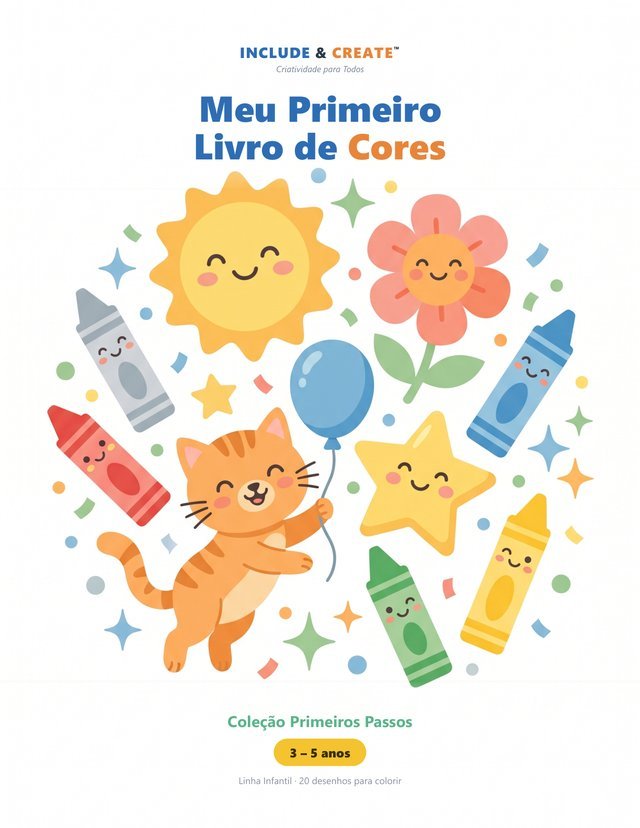 My First Book of ColoursFirst Steps
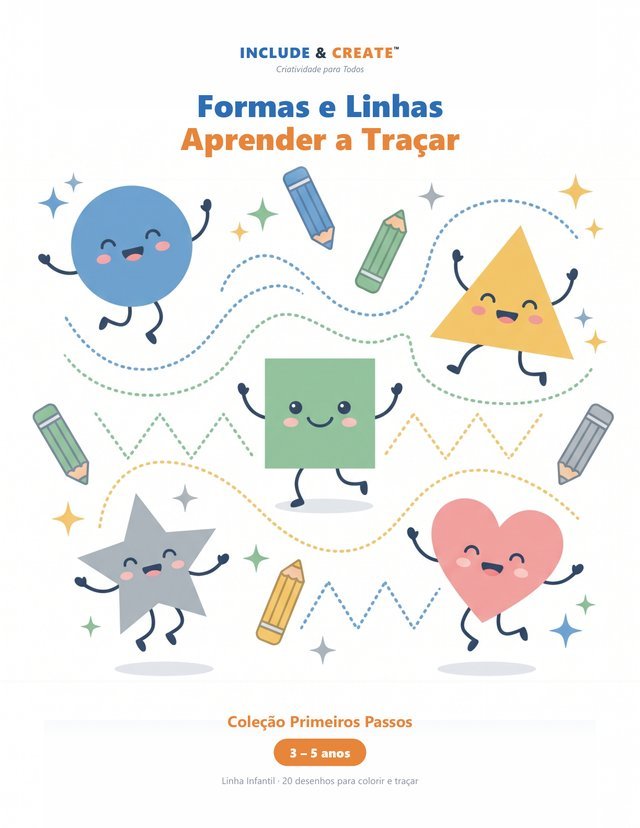 Shapes and Lines – Learning to TraceFirst Steps
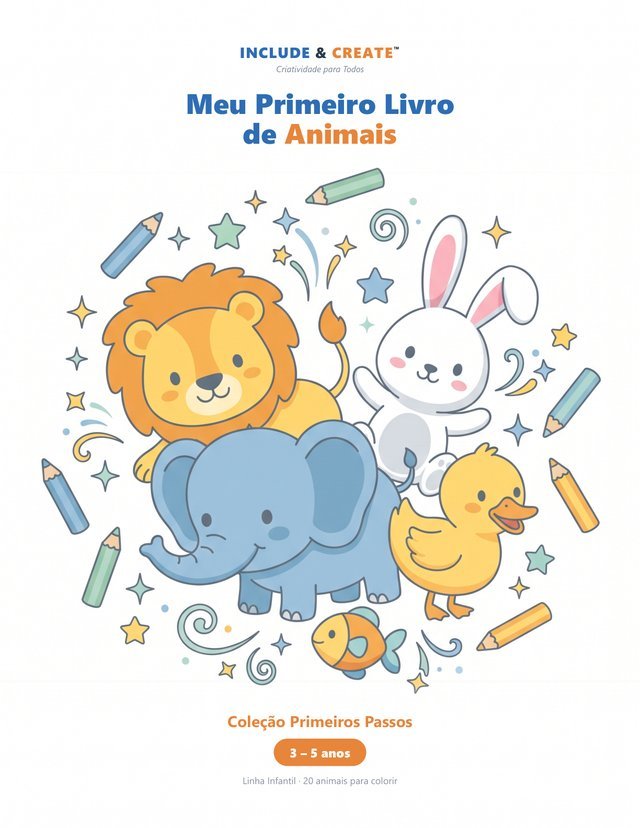 My First Book of AnimalsFirst Steps
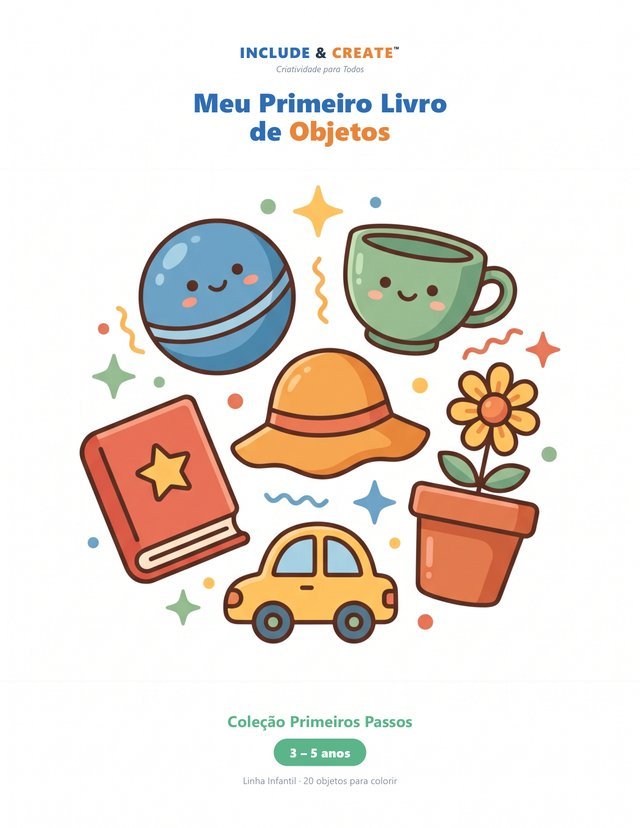 My First Book of ObjectsFirst Steps
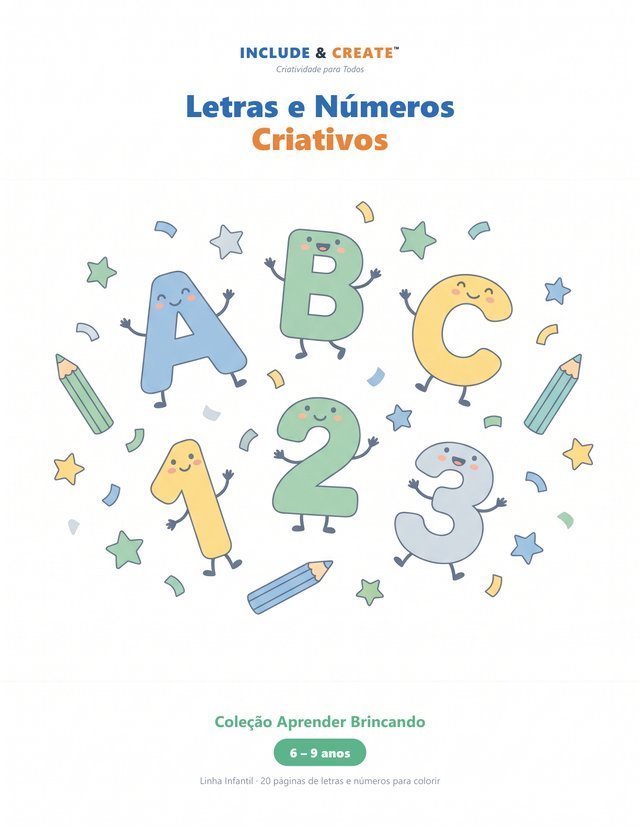 Creative Letters and NumbersLearning Through Play
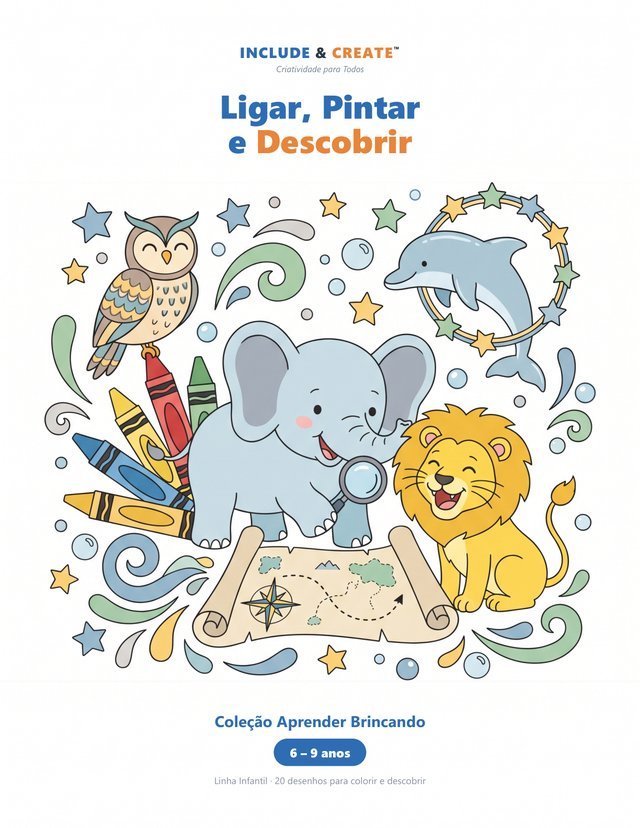 Connect, Colour and DiscoverLearning Through Play
Frequently asked questions
From what age does this make sense?
Around 3, once the child can hold a thick pencil and keep it on the paper.
Pencils or markers?
Thick coloured pencils, at first. They are easier to grip, they do not run, and they let the child vary pressure.
Should I correct colouring outside the lines?
At this stage the point is the gesture and the enjoyment. Staying inside the lines arrives on its own later.
You can try it right now, for free
The platform's colour studio is free: pick a drawing, colour it on screen — phone, tablet or computer — and download your artwork. You do not have to buy anything to start.
This page in other languages: Português · Français · Español